
Any model. Any agent.
One memory.
A coding agent that runs on any model you pay for, drives Claude Code, Codex and Cursor on the plans you already have, and remembers what every session learned.
curl -fsSL https://filamentdev.com/install.sh | shAlso for macOS, Linux and a Linux server
Your keys never leave your computer.API keys, code and chats stay on your machine. We never see them. No account, no trackers.
No personal data.Just a download count by country, and anonymous usage like which models and providers get used. See exactly what's sent
Open source.Every line is on GitHub under the Apache License 2.0, so you can check what Filament does for yourself. Read the source
Made by mathematicians and game‑engine developers.Built the way engines are built: every token accounted for.
Everyone working for this chat
Runs the agents you already use, on the models you already pay for
- Claude Code
- Codex
- Cursor
- Gemini CLI
- Qoder
- Anthropic
- OpenAI
- OpenRouter
- DeepSeek
- Moonshot
- Mistral
- Qwen
- Ollama
- LM Studio
- vLLM
- Hugging Face
See it all in three minutes.
One prompt becomes a plan, the plan runs on agents across your machines, and the work comes back checked.
Several agents on one project, without collisions.
Ask for something big and your agent lays it out as a task graph. The pieces that don't touch each other go to helpers at once, each in its own git worktree: Claude Code, Codex, or Filament's own agent on any model.
Run tasks in parallel“In my own runs, splitting a task across parallel worktrees made it about twice as fast. It used about 40% fewer tokens, even with several agents, when the models were used in Filament, either on an API key or through coding agents. The work came back about twice as good, too: thanks to the task graph and memory, every agent knows what it is doing.”
Claude Code, Codex, Cursor, Antigravity, Devin and any ACP agent, inside Filament.
The coding agents you already use run inside Filament on your own plans, with as many accounts signed in at once as you like. Each one gets the project's memory as its brief, works in its own worktree, and shows its work live.
Coding agents in the harness
A memory that steers every agent.
Every model and agent starts out knowing your rules, your projects and what past sessions found, so you never repeat them. Confirm, correct or retire anything it holds.
How memory works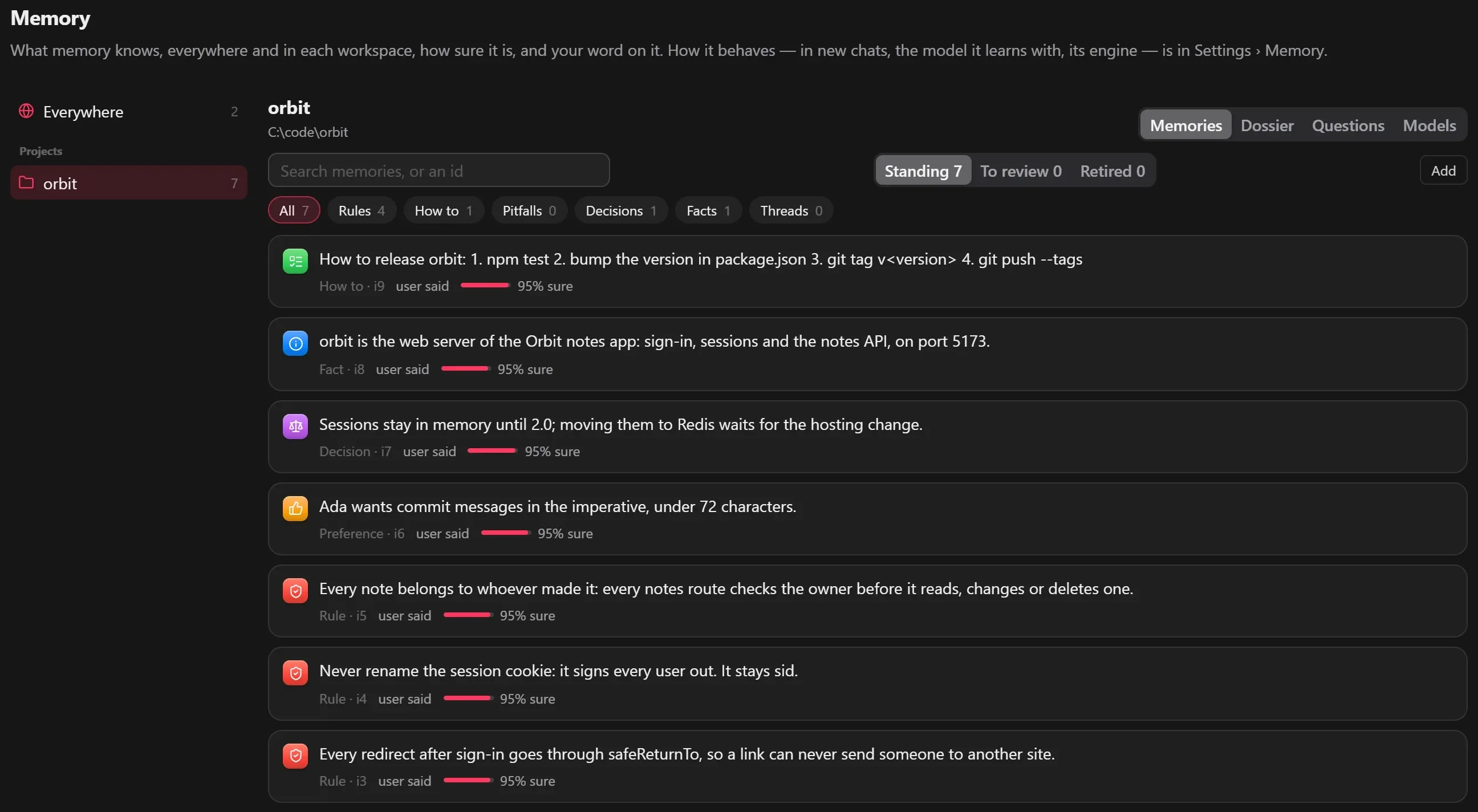
About 99% read from the cache.
Filament's own agent loop keeps the start of every request the same, byte for byte, so the provider reads almost all of it from its prompt cache: 98.87% of input tokens over 4,491 model calls, in the maker's own use.
The cache and the context window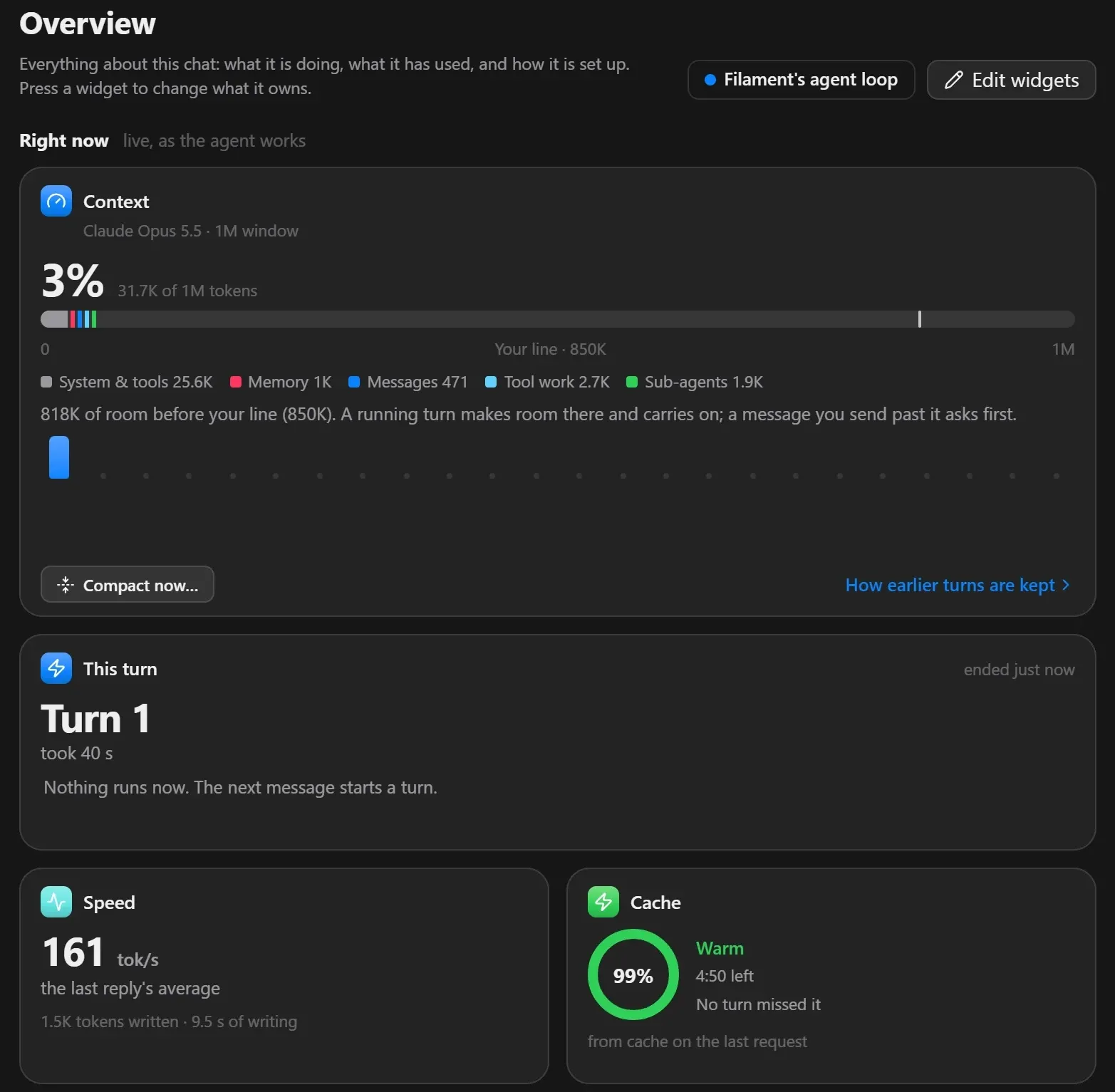
Every model you pay for. Every agent you use.
Claude Code and Codex sit beside every provider you connect, even a model on your own GPU. Turn on failover, and a busy provider hands the turn to the next model on your list.
Models and coding agents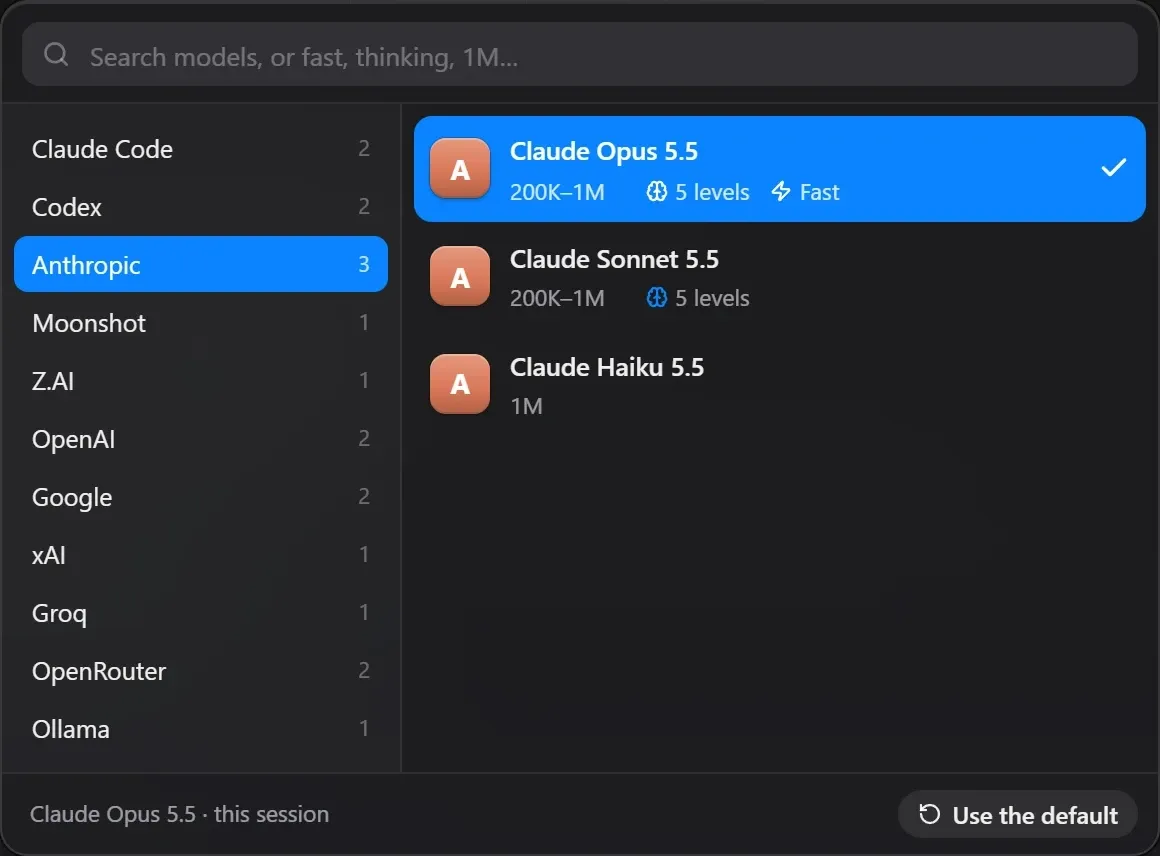
One page for every agent at work.
A project's Space shows each chat's lane and branch, warns when two touch the same file, and keeps a board the agents update themselves.
Spaces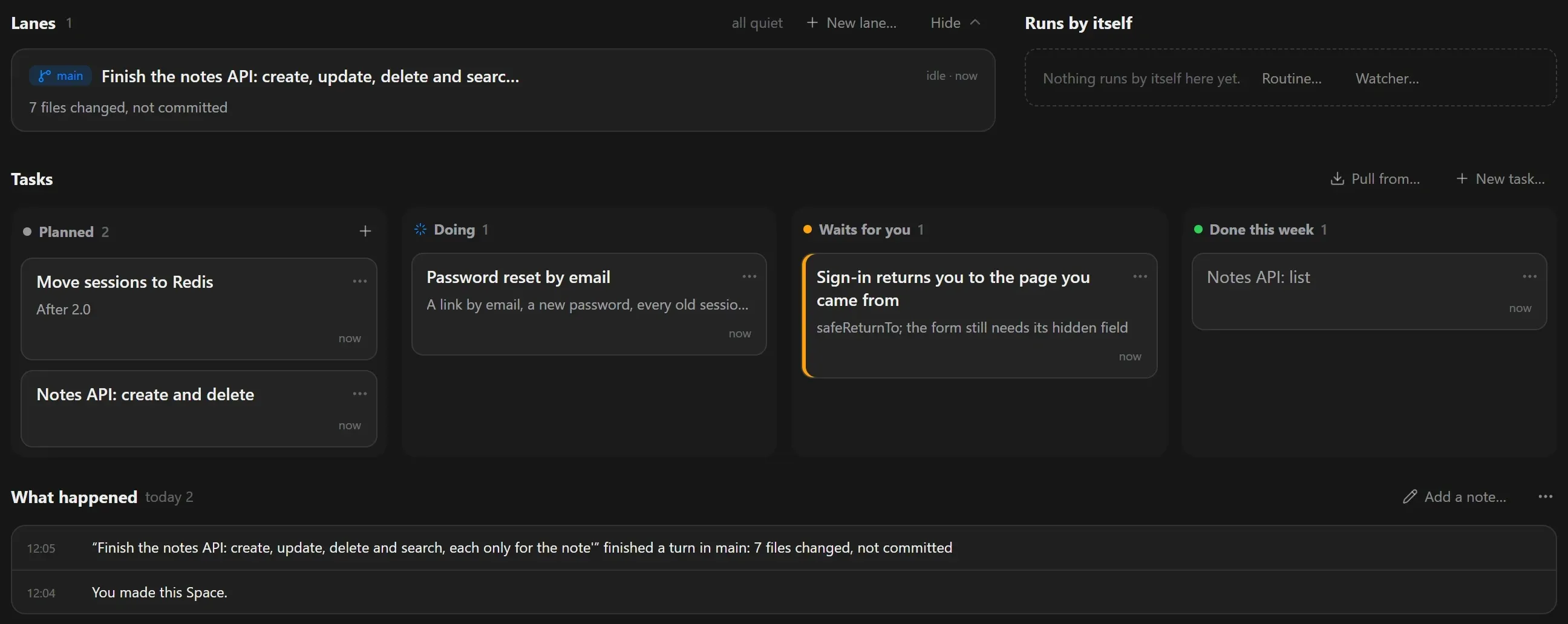
And a lot more.
Search what Filament does. Every row opens its page in the guide.
- Your agent, on any modelFile, shell, search, web and memory tools for any model in the picker, with no cap on rounds.Any model, any agent
- Coding agents on your plansClaude Code, Codex, Cursor, Gemini and Qoder run inside Filament through their own official tools.Any model, any agent
- Any providerAnthropic, OpenAI, OpenRouter, DeepSeek, Groq and more. Add a key and it's tested on the spot.Any model, any agent
- Local modelsOllama, LM Studio and vLLM on your own GPU, side by side with the cloud.Any model, any agent
- Backups when a provider failsBusy, refused or out of allowance: the turn goes on with the next model on your list.Any model, any agent
- The model name as a remote controlEffort, fast mode, plan mode or an old session, chosen just by how you write the model name.Any model, any agent
- Learns without being askedOn from the first start. It keeps rules, decisions, pitfalls and how-tos from your work.A memory that learns you
- At the moment of actionA known pitfall shows up on the very command that would repeat it.A memory that learns you
- See it, correct itConfirm, correct or retire what it holds in one click. Your word stays apart from a model's guess.A memory that learns you
- For every agent and toolClaude Code, Cursor or any MCP client outside Filament shares the same memory.A memory that learns you
- Bring your old chatsImport your Claude Code, Codex and Cursor history, and continue any of it on any model.A memory that learns you
- Local and encryptedIt all stays on your machine. Leave out any project or chat.A memory that learns you
- The OverviewContext fill, cache, speed, this turn's step, files changed and the agents at work, on one page.See inside every turn
- A cache you can seeWhether the provider's cache is warm and how long it stays that way, so you know before you send.See inside every turn
- Compaction you controlYour own line on the context bar. Filament asks first, and you choose how to make room.See inside every turn
- The live PlanThe agent's plan as a graph of what runs, waits and is done. It survives compactions and restarts.See inside every turn
- Every change visibleEach edit as a diff, a card of every file a turn changed, and the Changes tab per agent.See inside every turn
- Next requestExactly what your next message will send, before you send it.See inside every turn
- Agents ready to askProduct, End user, Builder and Reviewer. Ask any of them with @name for a blind second opinion.Not one agent. A team
- Builders in chargeA lead plans, workers build in parallel worktrees, and Filament runs each change's check itself.Not one agent. A team
- BugHunters on the sideParallel hunters comb what you just built, checkers verify, and you get one ranked list.Not one agent. A team
- FlowsChain agents, teams and your own review into a pipeline that runs on its own branch.Not one agent. A team
- Plan first, then approveA read-only plan you review and amend before a single file changes.Not one agent. A team
- Letters between chatsOne chat's agent asks another's, and the answer comes back by itself.Not one agent. A team
- The agent's browserIt opens your app, clicks through it and checks its work while you watch. Take over any time.It checks its work. You stay in charge
- Steer mid-turnCorrect it while it works without stopping it, or take a message back before it lands.It checks its work. You stay in charge
- Long commands in the backgroundBuilds and test runs move aside instead of timing out, and the agent goes on when they finish.It checks its work. You stay in charge
- Permission modesRead-only, ask, edit or full access. Commands that only read never interrupt you.It checks its work. You stay in charge
- Code understandingGo to definition, find references and compile errors after each edit, on any model.It checks its work. You stay in charge
- Goals that keep goingGive it a goal and it works round after round until it's done or needs you.It checks its work. You stay in charge
- SpacesEach chat's lane and branch, overlaps between lanes, a task board and a logbook that writes itself.One page for every agent at work
- NowWhat needs you, what's working and what finished, across every project, at the top of the sidebar.One page for every agent at work
- A worktree per chatEach chat in its own copy of the repo, with your heavy files copied in.One page for every agent at work
- ArtifactsTrackers, docs, slides and dashboards the agent builds and you keep, with version history.One page for every agent at work
- RoutinesScheduled agent work you approve once, and can pause everywhere.One page for every agent at work
- Home and draftsOne inbox across projects. Agents write drafts; only your Send sends them.One page for every agent at work
- Agents on your other machines“Run the Mac build on Studio”, and a helper runs it there and reports back.All your machines, one window
- One check on every machineRun the suite everywhere and get one table back, every machine on the same commit.All your machines, one window
- Models from your other machinesUse the GPU desktop's local models from your laptop.All your machines, one window
- Remote accessPair a laptop or phone with a code and drive your chats from there.All your machines, one window
- Linux serverOne command, no root, x86_64 or arm64, kept running by systemd.All your machines, one window
- One address for every toolClaude Code, Codex or any SDK, pointed at Filament, reach every model you've connected.Plug in everything else
- Both API formatsAnthropic and OpenAI formats on one port, translated both ways.Plug in everything else
- ConnectorsGitHub, Linear, Slack, Notion and more, added once for every chat.Plug in everything else
- Plugins and skillsClaude Code and Codex plugins and skills, on any model.Plug in everything else
- The consoleEvery request with what was sent, what came back and what Filament changed.Plug in everything else
- Desktop and command lineA tray that shows what needs you, and a CLI that works over SSH.Plug in everything else
Nothing by that name yet. The guide has everything.
Powerful, and still yours.
Stays on your machine
Your code, chats, memory and keys stay on this computer. Secrets are encrypted and kept out of every log.
Only you can say yes
Permission prompts are answered in Filament's own window. No other program can answer them, not even the agent's shell.
You see the context fill
A ring shows how full the window is and with what. Filament asks before it makes room, and you choose how.
Up when providers aren't
When a provider is busy, refuses, or your allowance runs out, the turn goes on with the next model on your list.
Who builds it
Created by mathematicians and the people who write game engines.
Built the way engines are built: every token accounted for, the cache kept warm, and nothing sent to a model that it didn't need.
Open source
Every line is public.
Filament's code is on GitHub under the Apache License 2.0: read it, build it, and check for yourself what it sends.

Give every model a memory.
Free for Windows, macOS and Linux. Bring the models and agents you already pay for.